
The Formulation Secret Behind Korean Vitamin C Serums
Why Your Vitamin C Serums Fail (And How Korean pH Science Fixes It)


If you visited a pharmacy in Myeongdong and spoke with a Korean cosmetic chemist, they would probably tell you within a minute why the vitamin C serum you have used for eight months was not working.
You would show them your product, and the expert would check the pH. The conversation would likely include comments like “Wrong pH” and “The product cannot penetrate.”
I was spending $30 a month on a serum that did not absorb into my skin at all.
The pH of a vitamin C serum, specifically whether it is acidic enough for the active ingredient to cross the skin’s barrier, is the most important factor in whether the serum works. Most articles about Korean vitamin C serums do not mention this. Western brands rarely list the pH on their packaging, and most consumers do not know to ask. Korean cosmetic chemists focused on getting this detail right, which is why their serums often work better than others, regardless of packaging or brand.
Why L-Ascorbic Acid Is So Hard to Stabilize (And What Korean Brands Did About It)
L-ascorbic acid is the pure form of vitamin C and the most researched type used in skincare, but it is chemically unstable. It oxidizes when exposed to air, light, or heat. It also breaks down in water-based formulas and reacts with metal ions. A new bottle of high-strength L-ascorbic acid serum can become almost useless within months of opening, and this happens long before you notice any change in how it looks or smells.
To clear up confusion: L-ascorbic acid and vitamin C are the same molecule. The terms mean the same thing. Ingredient lists always use the International Nomenclature Cosmetic Ingredient (INCI) name, which is L-ascorbic acid.
It helps to know how oxidation works, because it shows when to replace your serum. If your product is clear or pale yellow, it is still active. If it turns a deeper yellow, it has started to break down. Orange or amber means it has fully oxidized and the active ingredient has changed to dehydroascorbic acid, which does not work the same way in your skin. An oxidized serum is not harmful, but it is no longer useful.
Most Western brands tried to address the stability problem in two ways: either adding harsh solvents or reducing the amount of active ingredient so the product would last longer but work less well. Both are compromises, and neither fixes the main issue.
The main issue is that L-ascorbic acid needs a very acidic environment, with a pH between 2.5 and 3.5, to stay stable in water. If the pH is higher, it breaks down quickly. Many brands use a higher pH to make their products less irritating, but this means the serum is less effective, and they often do not explain this trade-off. Korean chemists took a different approach by developing new vitamin C derivatives that solve the absorption problem without needing such a low pH.
How Korean Cosmetic Regulation Produced Better Vitamin C Formulations
Korean cosmetic chemists improved vitamin C formulas because their regulations and consumer habits pushed them to solve the real problem, not just work around it. The Korean Ministry of Food and Drug Safety required detailed ingredient lists on cosmetic labels as early as the 2000s, long before similar rules in the West. Korean shoppers read ingredient lists carefully, much like people in other countries read nutrition labels, so brands had to focus on real quality.
Korean cosmetic chemists tackled vitamin C’s two main problems: stability and pH sensitivity. Over about twenty years, they developed a group of derivatives that keep the benefits of vitamin C while solving the issues that made L-ascorbic acid hard to use in large-scale products.
This is especially important for treating hyperpigmentation and dark spots. The brightening effects people want from vitamin C, like fading marks, reducing melanin, and evening skin tone, can be achieved just as well with some well-made derivatives as with L-ascorbic acid. Sometimes, these derivatives are even better for sensitive or reactive skin. What matters most is not the exact molecule, but how well the product is formulated.
The Korean cosmetic industry does not use special ingredients that others cannot get. Instead, they focus on developing formulas carefully, knowing that their market will notice if the products do not work.
Three of the Vitamin C Derivatives Korean Brands Mastered
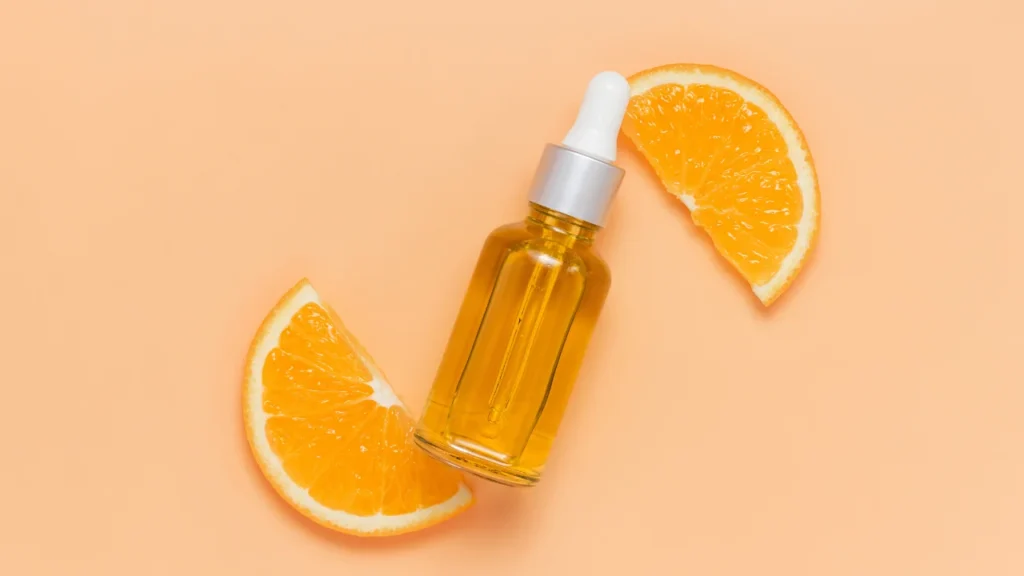
Korean cosmetic chemists now use three main vitamin C derivatives, each solving a different part of the instability problem. All three convert to active ascorbic acid in the skin, but they do so in slightly different ways. None of the others has the low pH that L-ascorbic acid does, which is a big advantage.
3-O-Ethyl Ascorbic Acid (3-OAA)
3-OAA dissolves in both water and oil, which helps it absorb better than regular vitamin C. Because it is lipid-soluble, it does not need a very acidic pH to cross the skin barrier. If you want strong vitamin C results without the irritation that can come from low pH, 3-OAA is the closest match to L-ascorbic acid. TIAM My Signature Red C Serum, Axis-Y Artichoke Intensive Skin Barrier Ampoule, and By Wishtrend Pure Vitamin C 21.5% Advanced Serum are popular products using this ingredient. It is best for people who want brightening with less risk of irritation.
Ascorbyl Glucoside
Ascorbyl glucoside is vitamin C attached to glucose, which makes it much more stable in water than L-ascorbic acid. Skin enzymes break the glucose bond and release active vitamin C in your skin. This process is not completely efficient, so the amount of vitamin C that actually reaches your skin cells is less than what the label says. The benefit is that the product is very stable and gentle. If you can use it every day because it does not irritate your skin, you will get better results than with a strong serum you avoid. Klairs Freshly Juiced Vitamin Drop is a well-known ascorbyl glucoside product in Korean skincare and works well for people with sensitive or reactive skin.
Ascorbyl Tetraisopalmitate (VC-IP)
VC-IP dissolves in oil, so it crosses the skin’s barrier easily without needing a low pH. It penetrates deep into the skin, where collagen is produced, making it useful for anti-aging as well as brightening. ISNTREE Hyaluronic Acid Vitamin C Serum uses VC-IP in a hydrating formula, making it one of the most comfortable vitamin C serums. It is best for dry skin.
Concentration: what the label numbers actually mean
For L-ascorbic acid, the effective range is 10-20%. Below 10%, there is little evidence of visible brightening or dark-spot fading. Above 20%, irritation goes up without much extra benefit. COSRX Pure Vitamin C 23% Serum is at the high end and should be introduced slowly. For 3-OAA, look for 2-5%. For ascorbyl glucoside, 2-10% works best.
The ferulic acid and vitamin E pairing
Ferulic acid helps stabilize vitamin C in water and enhances its protection against sunlight when combined with vitamin E (tocopherol). The mix of vitamin C, vitamin E, and ferulic acid is one of the most well-known antioxidant combinations in skincare. If a Korean vitamin C serum lists ferulic acid or tocopherol alongside vitamin C, those ingredients help stabilize the formula and improve its effectiveness. By Wishtrend Pure Vitamin C 21.5% uses this combination. COSRX Pure Vitamin C 23% includes vitamin E for the same reason. If you are choosing between two similar products, and one contains ferulic acid, the science supports choosing that one.
Vitamin C Serum pH Decides Whether Your Serum Works at All.
The pH of a vitamin C serum decides if L-ascorbic acid can get through the skin’s barrier and reach the deeper layers where it helps make collagen and blocks the enzyme that makes melanin. At neutral or high pH, the molecule has a negative charge and cannot cross the barrier. At a pH between 2.5 and 3.5, it is uncharged and can pass through. This is not just a preference—it is basic chemistry.
A 20% L-ascorbic acid serum with a pH of 5.0 will not work better than a 10% serum with a pH of 3.0. The higher-strength product stays on the skin’s surface, while the lower-pH product actually reaches the cells where it can help. Dermatologist Dr. Elena Rostova has called serums with neutral pH “chemically useless” because the vitamin C is present, but it cannot penetrate the skin.
Most Western brands do not share their product’s pH because it would raise questions about whether the serum really works. A pH 5 serum is easier to make and feels better on the skin, but it does not do what the marketing suggests. Korean brands, selling to customers who read ingredient lists and check details online before buying, had more reason to get the formula right and be honest about it.
For serums made with derivatives, pH is much less important. Products with 3-OAA, VC-IP, or ascorbyl glucoside do not need an acidic environment to work. If your skin cannot handle a low-pH L-ascorbic acid serum, these derivatives are not a downgrade. They use a different chemical process to get the same results.
How to Layer Korean Vitamin C Serum for Maximum Absorption
You should use Korean vitamin C serums in the morning, after cleansing and before moisturizer. Vitamin C is an antioxidant, which means it helps protect your skin from free radicals caused by sunlight and pollution during the day. Using vitamin C at night is not harmful, but it is most useful during the day when your skin faces these threats.
Most people can use vitamin C serum every day once their skin gets used to it. If you are new to L-ascorbic acid at 15% or higher, start by using it every other day for the first week. Apply it to clean, dry skin before other active products, and let it absorb for 30 to 60 seconds before moving to the next step. GOODAL Green Tangerine Vitamin C Serum is a good choice for beginners. The green tangerine extract from Jeju Island adds extra antioxidants, and tests over four weeks have shown it gives a visible glow without the irritation risk of a strong low-pH L-ascorbic acid serum.
People often ask about using niacinamide with vitamin C. You can layer them, and the worry that they react to form nicotinic acid only happens at temperatures much higher than what your skin ever reaches. Korean dermatologists settled this issue years ago. ISNTREE C-Niacin Toning Ampoule combines ascorbyl glucoside and niacinamide in one product. These two ingredients work together to brighten and even out skin tone, and Korean brands intentionally use them together.
However, you should not use vitamin C and exfoliating acids together. Do not layer L-ascorbic acid with AHAs or BHAs in the same morning routine. Using both can make your skin too acidic and damage its moisture barrier over time. Use vitamin C in the morning and exfoliating acids at night.
Always use sunscreen with vitamin C. When used together, vitamin C makes your SPF work even better. On days you are outside, this combination gives you much better UV protection than either product alone. Even indoors, vitamin C protects against blue light and pollution, which SPF does not cover. As one Seoul-based dermatologist put it: “Vitamin C without sunscreen is paying for insurance and leaving the windows open.”
If you want to know how vitamin C fits into a simple, effective routine, check out the article on the minimalist Korean skincare routine. It explains how focusing on good formulas can make four steps work as well as ten.
What to Look For on a Korean Vitamin C Serum Label
When choosing a Korean vitamin C serum, focus on four things: the concentration of the active ingredient, the pH (if listed), the type of derivative, and the packaging. Do not worry about the brand name, the price, or the marketing claims.
For L-ascorbic acid serums, look for a concentration between 10 and 20%. Check if the pH is listed and make sure it is 3.5 or lower. Choose packaging that is opaque or uses an airless pump instead of a clear dropper bottle, because droppers let air in and can oxidize the product over time. COSRX Triple C Lightning Liquid (20% L-ascorbic acid) and By Wishtrend Pure Vitamin C 21.5% use special packaging for this reason. COSRX Pure Vitamin C 23% Serum is made for tough hyperpigmentation and dark marks, and should be introduced slowly if your skin is not used to strong vitamin C.
For serums with derivatives: choose 3-OAA if you want results similar to L-ascorbic acid but without worrying about pH. Pick ascorbyl glucoside if your skin is sensitive and you are patient with results. Go for VC-IP if your skin is dry or you like oil-based products. GOODAL Green Tangerine Vitamin C Serum uses a blend of derivatives and green tangerine extract, and has shown good results for glow and even skin tone in tests. It also does not need to be kept in the fridge, which is helpful if you have lost L-ascorbic acid serums to a warm bathroom.
Here are two products that are not often mentioned in Western articles: Beauty of Joseon Glow Serum combines vitamin C derivatives with propolis extract, which helps calm the skin and support its barrier, making it great for skin recovering from too much exfoliation. Numbuzin No.5 Vitamin Concentrated Serum features a powerful blend of derivatives and has been clinically tested to deliver visible brightness improvements in 4 weeks.
The most important thing to look for on the label is whether the brand lists the pH. Most brands do not. The ones that do are showing they care more about making a good formula than just marketing. Those are the brands you want to trust with your vitamin C serum.
